Operating Environment
ASUS adheres to the business philosophy of "striving to be among the world-class green high-tech leaders". We believe that we should take care of the environment in exchange for the nature resources that bring profits to us. We incorporate environmental considerations into our operational decision making process, continue to develop products with low environmental impact, and establish a dedicated team that ensures ASUS complies to all relevant environmental regulations by assessing corporate activities. ASUS will continue to formulate and implement action plans to minimize the impact on the environment and continue to move towards the goal of "zero pollution".
When selecting the location of the headquarter, we decided to locate in a legal science and technology park. The establishment of this area is subject to strict environmental impact assessment. It is not only outside the scope of the nature reserve but also considers factors such as the preservation of biodiversity, ecosystems and natural species, and no deforestation to avoid any negative impacts. At the same time, we implement management based on the following major environmental issues to reduce the environmental footprint of our operations.
Continuously Reducing Environmental Footprint
ASUS has established an Environment, Safety, and Health (ESH) team to assess operational environmental impacts and ensure regulatory compliance. To enhance environmental protection performance, the Company continues to promote improvement initiatives. In 2025, the training completion rate for employees required to undergo ESH education reached 100%. ASUS also regularly conducts environmental risk assessments targeting potential significant environmental impacts and occupational safety and health hazards, achieving a 100% assessment completion rate at its operational sites in 2025. These efforts aim to minimize environmental impacts and move toward the goal of “zero pollution.” As overseas sites are leased offices, data on waste, wastewater, and water usage is not available; therefore, the following information pertains to the operations headquarters and repair centers.


Water Resource Management
ASUS primarily uses water at its operational sites for basic domestic needs in office operations. In 2025, total water withdrawal was 290.7 ML, mainly sourced from municipal water supply systems, with only the Suzhou site using surface water as its water source. Total water discharge for the year was approximately 262 ML, all of which was properly treated through sewage systems and wastewater treatment plants. The risk of business operations being impacted by water resources is relatively low. However, as part of its corporate social responsibility, ASUS implements various water-saving initiatives to manage water resources effectively. In 2022, the Liguang Building at the corporate headquarters received ISO 46001 certification for water efficiency management, and an annual target of reducing water usage by 1% was set.
To strengthen the professional capabilities of departments related to water resource management, ASUS held training courses in 2025, including ISO 46001 internal auditor training, with a total of 9 participants and a 100% completion rate. To achieve effective water resource management, improve water use efficiency, and reduce water waste, ASUS has implemented multiple hardware and software measures. Water meters have been installed in pipelines to monitor and analyze water usage, allowing the Company to identify opportunities for improving water efficiency. Alerts are issued to relevant personnel in the event of abnormal water usage to reduce water waste. In addition, a water recycling facility has been established at the corporate headquarters to reuse overflow water for toilet flushing, air conditioning cooling, and landscape irrigation. Wastewater is primarily domestic sewage from office operations and is discharged into designated wastewater treatment systems in accordance with government regulations; therefore, it is excluded from the scope of disclosure.

Water Withdrawal
Water Source
Wastewater mainly comprises general office sewage, which is discharged into designated sewage treatment systems as required by government regulations and is therefore not within the scope of disclosure.
Please visit HERE for water management in supply chain.
Waste Management and Zero Waste to Landfill
Waste is a heavy burden. Failure to deal with it properly will cause huge costs to the government, enterprises and society. Therefore, we expect to achieve zero waste and move toward the direction of the circular economy.
ASUS categorizes operational waste into general waste and industrial waste. General waste mainly consists of domestic waste generated by employees. Recyclable materials are properly recovered, while non-recyclable portions are ultimately incinerated. Hazardous industrial waste, which is part of industrial waste, primarily comes from R&D materials and various types of electronic waste generated from internal use, such as obsolete IT equipment, phones, and batteries. Through strict classification and management mechanisms, such waste is handed over to qualified recyclers for recycling and reuse, with no waste disposed of through landfill. In addition, ASUS promotes waste reduction and raises employee awareness of proper waste sorting and recycling through online training and educational materials.
Since 2015, ASUS has implemented a Zero Waste to Landfill initiative at its operations headquarters, following the UL 2799 Zero Waste to Landfill standard (ULECVP 2799). The initiative uses quantitative indicators to track waste flows and ensure that waste is properly recycled, reused, or converted, rather than directly sent to landfill.
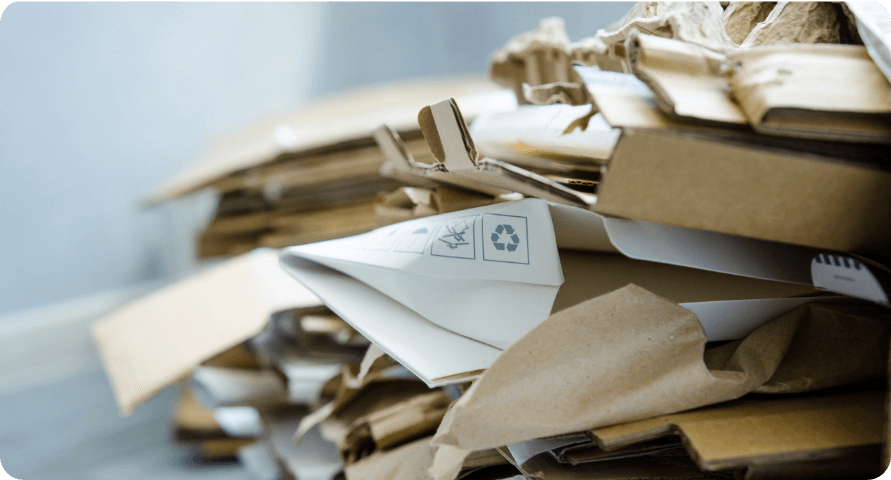
ASUS continues to implement waste reduction, recycling, and reuse measures. In 2025, a total of 518 pallets were recycled, reducing approximately 6 metric tons of waste sent for incineration, and 5.8 metric tons of foam material were recycled and reused. The employee cafeteria no longer provides single-use containers, and efforts have been made to reduce the use of paper receipts and plastic bags, adopt recycled paper towels, and promote the recycling and reuse of equipment and instruments.
Total Waste
Waste Disposal Methods
Note: Waste statistics cover ASUS headquarters
Green Building and Smart Building
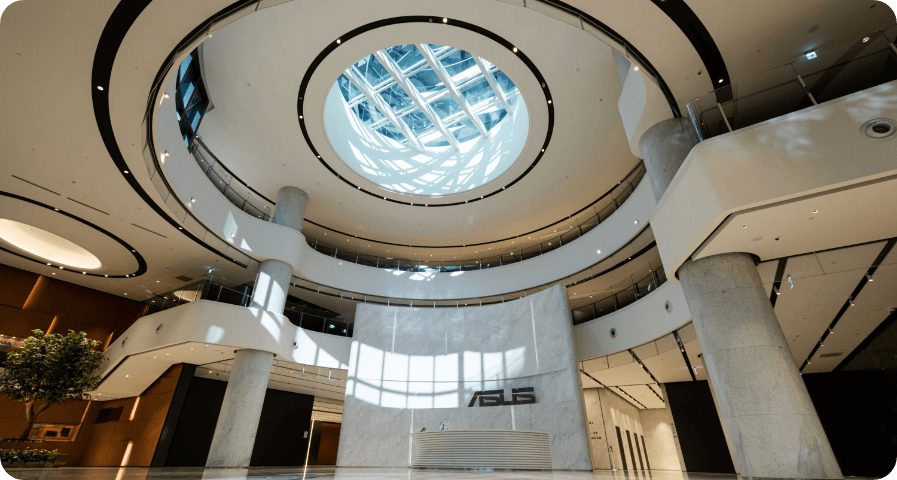
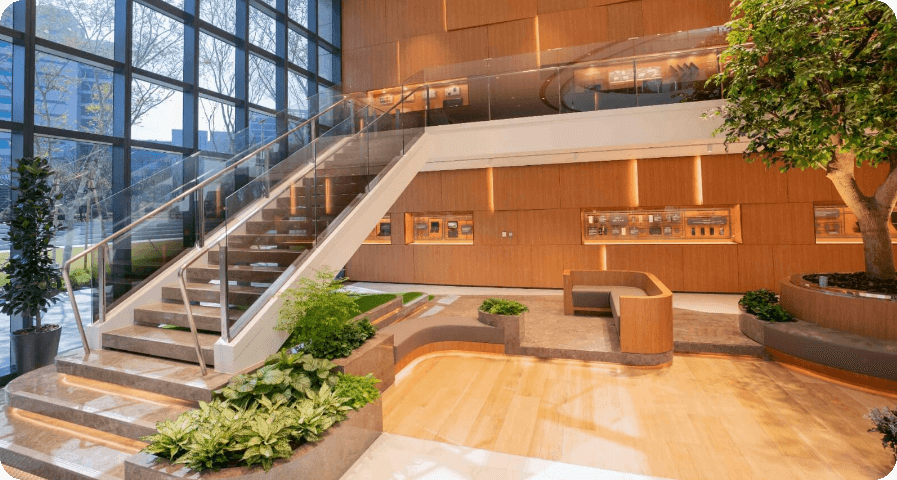
Taking two years to build, we officially opened the headquarter “LiGong Building”, which received LEED v4 BD+C (new building category) platinum certificate from USGBC (US Green Building Council) in November 2019. We has added many sustainable ideas in the design stage of the LiGong Building, including but not limited to:

Reduces the urban heat island effect
The green roof reduces the urban heat island effect.

Echo the natural ecology of Guandu
More than 5,000 square meters of green space retained to echo the natural ecology of Guandu

Rainwater recovery systems
Improve the utilization of water resources through rainwater recovery systems.

High efficiency of energy use through the smart control system and sensor to save energy and conserve water
High efficiency of energy use through the smart control system and sensor to save energy and conserve water. The indoor water conservation percentage is more than 55% higher than the standards of the LEED.
At the same time, the software infrastructure includes comprehensive information communication, system integration, energy-saving management and smart innovation. The LiGong Building also earned a diamond certification, the highest level for smart building, issued by the Ministry of the Interior of Taiwan.