
Natural Capital Actions
Actions within the Value Chain – Operational Sites / Supply Chain
Management measures at ASUS operational sites are categorized into freshwater resource management and waste management, as described below.
- Freshwater Resource Management:
The Li-Gong Building at ASUS headquarters has obtained ISO 46001 Water Efficiency Management System certification and set a target of reducing water use by 1% annually. To manage water resources effectively, improve efficiency, and reduce water waste, ASUS has implemented a range of hardware- and software-based measures. Water meters have been installed on water pipelines to monitor and analyze consumption and identify opportunities to improve efficiency. Alerts are issued to relevant personnel when abnormal water use is detected, helping to reduce waste. ASUS has also installed water recycling and reuse facilities at its corporate headquarters. Overflow water is recovered for toilet flushing, air-conditioning cooling water, and landscape maintenance. Wastewater arises mainly from ordinary office sewage and is discharged into designated wastewater treatment systems in accordance with government regulations.
- Waste Management:
ASUS classifies waste into two categories: general industrial waste and hazardous industrial waste. Hazardous industrial waste primarily originates from R&D materials and defective products. Such waste is strictly identified, classified, and managed, and then handed over to qualified recycling contractors for reuse. General industrial waste refers to all other types of waste, mainly office and employee household waste. Recyclable materials are properly sorted for recovery, while non-recyclable portions are ultimately incinerated or landfilled. Since 2015, ASUS has promoted a Zero Waste to Landfill program at its corporate headquarters, adopting the UL Zero Waste to Landfill (UL ECVP 2799) standard. Quantitative indicators are used to track the flow of waste and ensure that it is properly recycled, reused, or converted, rather than directly landfilled.
In response to the aforementioned nature-related risks, ASUS has adopted circular economy practices and strengthened supply chain management to reduce the overall environmental impact of its value chain.
Circular Economy Actions and Performance
Raw material extraction during product manufacturing causes environmental impacts, including deforestation for wood used in packaging, mineral extraction for metal enclosures, and the use of petroleum products such as plastics. These activities may lead to land-use change, habitat destruction, and biodiversity loss. Through its circular economy strategy, ASUS maximizes resource-use benefits by establishing a circular supply chain, extending product life cycles, building recycling systems, and developing circular business models. This reduces demand for virgin materials and thereby eases pressure on natural ecosystems.
Key Actions and Performance
- Circular Supply Chain: ASUS focuses on reducing raw material use, introduces environmentally friendly materials—including recycled plastics, recycled metals, and recycled paper—to lower the proportion of virgin materials, and properly manages chemicals in its products. In 2025, ASUS proactively controlled more than 450 chemicals and had cumulatively used more than 38,000 metric tons of environmentally friendly materials.
- Product Life Cycle Extension: Through design for easy disassembly and recycling, consumers can upgrade components to meet their needs when a product requires improvement or experiences a partial failure, without being forced to replace the entire product. In 2025, ASUS commercial notebooks achieved an average score above 9.0 on the French Repairability Index. ASUS also extends product life cycles through modular design, which improves product disassembly. In addition to enabling rapid, building-block-style assembly and disassembly, modular products make it easier to upgrade, replace, repair, or renew functional components, thereby extending product life through assembly, servicing, reuse, and recycling.
- Recycling System Development: Based on extended producer responsibility, ASUS is committed to advancing the circular economy and complying with waste recycling regulations in each country. The Company provides free product recycling services in major global sales markets and has established ASUS Recycler Management Standards that exceed regulatory requirements to ensure proper resource reuse and prevent improper disposal or illegal treatment. The number of countries in which ASUS provides recycling services has progressively increased from 25 in 2020 to 30 this year, while coverage of global sales markets has increased from 77% to more than 83%. ASUS provides diversified recycling services based on local sales and service models, including drop-off locations, mail-back programs, trade-in programs, and pickup services, and has recycled more than 12,891 metric tons of electronic waste.
- Circular Business Model: ASUS offers Device as a Service (DaaS), replacing the traditional concept of ownership through purchase with flexible leasing and subscription payment options. The model provides corporate customers with a comprehensive leasing solution for IT hardware and services, helping them reduce hardware expenditure, deployment costs, support service costs, and other expenses. In 2025, equipment provided through the DaaS model for ASUS commercial products was estimated to save 40,590 kWh of electricity and reduce GHG emissions by 20 metric tons during the lease term, further enhancing the potential sustainability and net-zero transition benefits for corporate customers.
Supply Chain Management and Performance
Environmental impacts generated from supply chain processes are the primary source of ASUS value chain impacts on natural capital. These include freshwater consumption and wastewater discharge during manufacturing (affecting aquatic ecosystems), and improper waste disposal (polluting soil and groundwater), which directly damage three core elements of ecosystems: water, land, and soil. Such impacts contribute to biodiversity loss and degradation of ecosystem functions. Through supply chain management strategies, ASUS improves suppliers’ environmental practices to help protect biodiversity and the integrity of natural capital.
Key Actions and Performance
- Responsible Minerals: In 2025, ASUS inventoried product-source smelters for 599 suppliers representing 95% of procurement value and analyzed their geographic distribution and conformance status. Smelters were located primarily in Asia (57%), followed by the Americas (17%), Europe (16%), Africa (9%), and Australia (1%). The survey confirmed that all were conformant smelters recognized by the Responsible Minerals Initiative (RMI) or the London Bullion Market Association (LBMA).
- Freshwater Resource Management:
- ASUS Key Supplier Water Management Program: In response to the challenges of climate change and uneven water distribution, ASUS recognizes the implications of water management for supply chain resilience and environmental responsibility. Product manufacturing relies heavily on collaboration across a diverse supply chain, and many processes involve substantial water use and wastewater treatment. Water risk therefore affects not only supply stability but also local communities and ecosystems. In 2023, ASUS designated water resources as a key supply chain management topic and established a mechanism covering production-line inventories, risk identification, and reduction targets. The inventory analysis showed that approximately 80% of water consumption was concentrated among motherboard, display panel, mechanical component, and battery suppliers and product assembly plants. ASUS accordingly developed tiered management and guidance strategies to strengthen overall water management capabilities.
In 2025, using the World Wide Fund for Nature water risk assessment tool, ASUS identified industrial zones surrounding Taihu Lake as areas of high water risk. It prioritized suppliers operating water-intensive processes—including IC, PCB, display panel, and mechanical-component electroplating processes—as well as assembly plants with water-intensive operations. In addition, 100% of motherboard manufacturers provided compliant wastewater testing reports, while 63% of key suppliers had established water conservation targets. ASUS will continue to strengthen supplier water management and collaboration. - Guidance and Support Results: ASUS completed an inventory of suppliers exposed to high water-use risk in the Taihu Lake Basin. It identified suppliers operating water-intensive IC, PCB, display panel, and mechanical-component electroplating processes and incorporated the operating-water scenarios of assembly plants, producing a targeted management list of 21 key entities. This transformed water risk from an abstract concept into a manageable starting point for action. ASUS also organized a technical forum on water reduction guidance and support, introduced industry best practices in water conservation, enhanced employees’ water-saving capabilities, and accelerated suppliers’ technology upgrades and practical implementation.
- ASUS Key Supplier Water Management Program: In response to the challenges of climate change and uneven water distribution, ASUS recognizes the implications of water management for supply chain resilience and environmental responsibility. Product manufacturing relies heavily on collaboration across a diverse supply chain, and many processes involve substantial water use and wastewater treatment. Water risk therefore affects not only supply stability but also local communities and ecosystems. In 2023, ASUS designated water resources as a key supply chain management topic and established a mechanism covering production-line inventories, risk identification, and reduction targets. The inventory analysis showed that approximately 80% of water consumption was concentrated among motherboard, display panel, mechanical component, and battery suppliers and product assembly plants. ASUS accordingly developed tiered management and guidance strategies to strengthen overall water management capabilities.
Progress of Freshwater Resource Management Support Program
Conduct an inventory of key water-resource suppliers
2023
- Using water-footprint data and product-process analysis, identify high water-use processes and supplier groups
- Establish a tiered list to inform subsequent management and assistance efforts

Develop risk awareness and management capabilities
2024
- Organize educational training sessions and seminars to communicate water-related regulatory developments and corporate responsibilities
- Leverage the WRI Aqueduct tool to evaluate water stress and risk in the regions where suppliers’ operational sites are located
- Implement the CDP Water Security framework to support suppliers in self-assessing their current water resource management practices
- Deliver risk-hotspot analysis reports to help suppliers identify sources of water-related risk and develop appropriate response capabilities

Establish reduction targets
2025
- Assist suppliers in accordance with their operational contexts and regional water risk profiles in establishing specific, measurable reduction targets
- Introduce technology to driven improvements—such as wastewater recycling and treatment systems, as well as process optimization—to reduce water consumption
- Offer industry best practices and illustrative case studies as reference points for continuous improvement.

Track progress regularly
2026
- Establish a semi-annual monitoring mechanism to regularly report water usage data and improvement progress
- Leverage a data platform for trend analysis to identify anomalies or elevated risks at an early stage
- Waste Management: ASUS extended its Zero Waste to Landfill experience at corporate headquarters to key suppliers and established waste diversion targets. In 2025, 26% of key suppliers had set waste diversion targets, while 58% had established waste reduction targets.
Actions within the Value Chain – Operational Sites and Supply Chain Actions on Biodiversity
Supply Chain Biodiversity Actions and Performance
Supply Chain Management Measures
- Integration of Biodiversity: Biodiversity issue identification and management are incorporated into the Supplier Code of Conduct. ASUS suppliers should consider the local environmental impacts of their operations and establish biodiversity policies.
- Water Resources: Suppliers are required to provide ASUS with quarterly water conservation performance data and compliant wastewater testing reports annually, obtain ISO 46001 Water Efficiency Management System certification, or establish recycled-water targets. A total of 63% of suppliers have established water reduction targets.
- Waste Management: 26% of key suppliers have set waste diversion targets, while 58% have established waste reduction targets.
- Biodiversity Audits: Suppliers located in key biodiversity areas are designated as priority suppliers for annual on-site audits.
- Supply Chain Transparency: Suppliers must provide detailed information on production processes, production and operations management reports, and raw material sources.
Actions Beyond the Value Chain
Dasyuehshan Middle-Altitude Pangolin Habitat Enhancement and Conservation Project
Issue Identification: State-owned forestland leased along kilometers 14 to 16 of Dasyuehshan Forest Road faces environmental issues involving soil degradation, which in turn affects the habitat quality of endangered species, as well as community economic challenges resulting from changes in government policy.
Because Taiwan is densely populated and has limited arable land, agricultural development is based mainly on intensive cultivation. To improve crop quality and yields and facilitate field management, farmers in the Dasyuehshan Forest Road area use conventional agricultural practices, applying chemical fertilizers, pesticides, and herbicides to farmland. However, the use of pesticides and herbicides to prevent and control crop diseases and pests leaves chemical residues in agricultural products and soil. Through bioaccumulation, these substances may even affect species at higher trophic levels in the local food chain, including the Chinese pangolin, which is listed as Critically Endangered on the IUCN Red List.
The earliest residents along kilometers 14 to 16 of Dasyuehshan Forest Road can be traced back to the Japanese colonial period and to the Nationalist government’s subsequent opening of mountain areas for settlement and cultivation. In choosing livelihood activities, residents prioritized high-value crops, including log-grown shiitake mushrooms, bananas, and, in more recent years, Asian pears and persimmons. As government forestland policy evolved, residents were required to work with the government to adopt more environmentally friendly cultivation methods. Along kilometers 14 to 16 of Dasyuehshan Forest Road, the National Land Conservation Plan—Specific Implementation Plan for Addressing Debris-Flow Disasters, approved in 2003, required leased land on which fruit trees had been planted in violation of regulations to be interplanted with afforestation trees. The Plan for Handling and Implementing Afforestation on Leased National Forestland Not Yet Fully Afforested, adopted in 2015, required 30% of leased land to be afforested and allowed existing fruit trees on the remaining 70% to remain under regulatory management, enabling lessees to renew their leases.
Increasingly stringent environmental policies created livelihood challenges for residents. The Forestry and Nature Conservation Agency, then the Forestry Bureau, invited the Kuan-Shu Educational Foundation, a nonprofit organization experienced in promoting environmentally friendly agriculture, to help local farmers transition to a more environmentally friendly cultivation method—herbaceous cultivation. Compared with conventional agriculture, herbaceous cultivation avoids herbicides and involves more frequent mowing. Weeds that do not obstruct cultivation are retained, while harmful or excessively tall weeds are removed, progressively reducing undesirable weed species and the impacts of chemicals on the land. During the transition to sod culture, farmers discovered Chinese pangolins. The Chinese pangolin is listed as Critically Endangered on the International Union for Conservation of Nature Red List of Threatened Species, also known as the IUCN Red List. Stable resident sighting reports have been recorded along kilometers 14 to 16 of Dasyuehshan Forest Road. ASUS therefore partnered with the Kuan-Shu Educational Foundation and invited Professor Ching-Min Sun of National Pingtung University of Science and Technology to conduct a three-year research project across selected areas along kilometers 14 to 16 of Dasyuehshan Forest Road and surrounding leased national forestland, covering approximately five hectares. The project examines how conventional farming and sod culture affect pangolin habitat quality, food resources, activity frequency, and other factors.
Surrounding Community and Ecological Surveys: Preliminary Results Demonstrate the Nature-Positive Potential of Sod Culture
Under the Forestry and Nature Conservation Agency’s Carbon Sink and Biodiversity ESG Project Matching Platform, ASUS applied for its nature-positive action program by submitting its own research proposal. Since the project was launched in 2024, interviews with farmers, monitoring of pangolin activity frequency, sampling surveys of local vegetation, surveys of pangolin food resources, and other approaches have been used to understand the respective habitat impacts of conventional farming and herbaceous cultivation. Preliminary survey results indicate that herbaceous cultivation has positive habitat impacts. Interim research results through 2025 are as follows:
- Pangolin activity frequency monitoring: A cumulative total of 189 pangolin burrows were identified from 2024 to 2025. The findings indicate that pangolin activity in the Dasyuehshan area is concentrated mainly at mid-elevations, with most activity occurring above 1,000 meters and estimated to be near forests or herbaceous cultivation areas.
- Analysis of soil pesticides and contaminants of emerging concern: The types and quantities of pesticides reported in interviews with farmers practicing conventional agriculture differed substantially from the pesticides and contaminants of emerging concern actually detected in the soil and from official crop-specific pesticide guidance. One possible reason is that farmers use additional pesticides, chemical fertilizers, herbicides, and other substances to maximize yields, thereby affecting the ecological environment.
- Survey of pangolin food resources (ant species and abundance): Lophomyrmex taivanae was the most abundant ant species identified, accounting for 80% of all individual ants. Among termites, Reticulitermes flaviceps had the highest occurrence rate; however, only one termite record was found in orchards using conventional farming, indicating that conventional farming has a greater impact on termite populations. Reticulitermes flaviceps provides more favorable habitat conditions for pangolin prey species than conventional farming.
- Ground vegetation survey: Herbaceously cultivated orchards had the highest species richness and vegetation cover, followed by forest plots, while orchards using conventional farming had the lowest. This indicates that herbaceously cultivated orchard management supports groundcover species composition and growth and provides a favorable environment for ground-dwelling ants and termites to reproduce.
Project Management and Stakeholder Collaboration
The research project brings together a comprehensive group of stakeholders from industry, government, academia, and nonprofit organizations. Their respective roles are integrated to advance the Dasyuehshan research project:
Project design recommendations: During the development of the self-proposed project, the headquarters and Taichung Branch of the Forestry and Nature Conservation Agency provided assistance, while the latest policy directions were incorporated to ensure alignment with national requirements and international trends.
Project coordination and management: ASUS serves as the project coordinator, consolidating stakeholder input and project progress and further providing funding and technological support. In 2025, the project introduced innovative radio-tracking technology to address the labor-efficiency challenges and reversed day-night schedules previously associated with pangolin tracking.
Project implementation: The research team led by Dr. Ching-Min Sun of National Pingtung University of Science and Technology is responsible for the research content and implementation. A project assistant is stationed in the community to perform the planned research work and assist farmers with temporary placement of pangolins they encounter, provide consultations, and plan community capacity-building courses.
Local community engagement and environmental education: The Kuan-Shu Educational Foundation, which has long assisted local residents with herbaceous cultivation techniques, works with the project assistant to provide local residents with agricultural knowledge, wildlife conservation knowledge, and related support. Drawing on its extensive environmental education design expertise, the Foundation also helped ASUS design an employee volunteer experience in 2025. Through a one-day excursion, ASUS employees learned about the history and culture of Dasyuehshan Forest Road, enjoyed local agricultural products, and participated in a simulated field-tracking experience for pangolins.
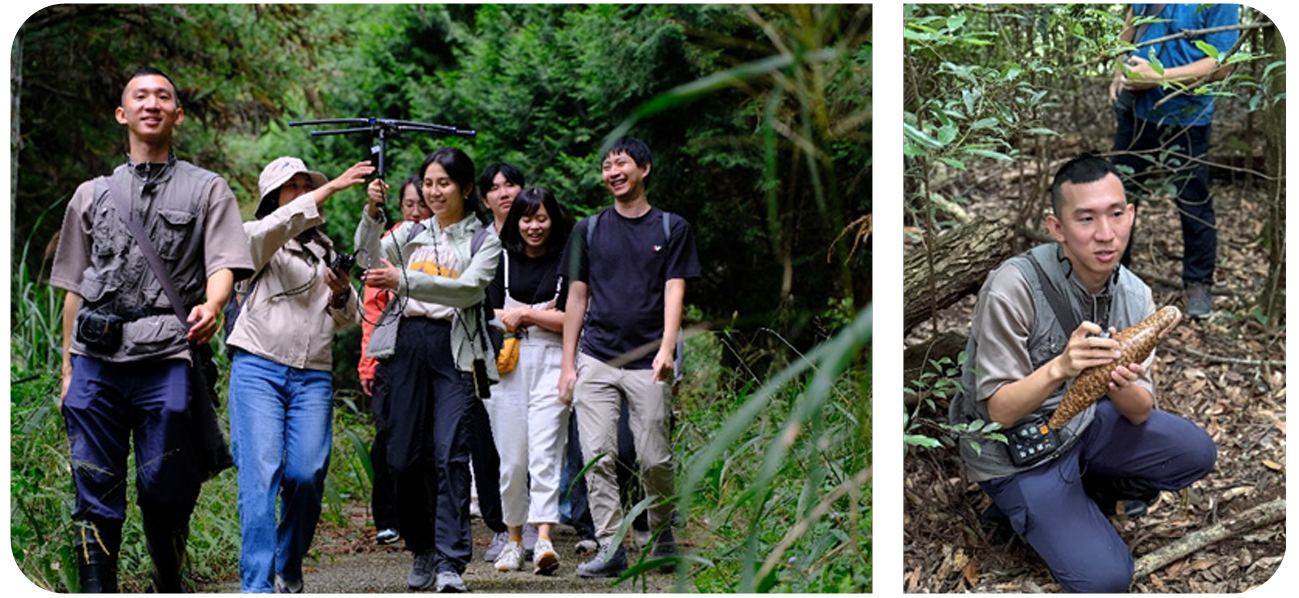
Project Impacts:
Employee
Pangolin conservation capacity-building course:
Following the first interactive employee lecture in 2024, Taiwan’s Pangolin: The Last Hope for Pangolins Worldwide—Documentary Screening and Post-Screening Discussion, ASUS organized a further pangolin conservation capacity-building course in 2025. Dr. Ching-Min Sun of National Pingtung University of Science and Technology introduced pangolin biology, behavior, global distribution, and current conservation status. Hands-on activities—including a photo-based survey of ants as pangolin prey and a tracking-device experience—provided employees with an experience distinct from conventional classroom lectures and increased their engagement.
Employee volunteer experience:
Building on indoor exercises, ASUS took employees to the project site for field simulations. The morning session consisted of an environmental education tour of the Dasyuehshan forest area. The Kuan-Shu Educational Foundation guided ASUS employees through areas near the indigenous cinnamon forest and Dasyuehshan Suspension Bridge and explained the area’s environmental history. At midday, ASUS collaborated with the Dasyuehshan Ecotourism Association to prepare meals using local ingredients, including indigenous cinnamon. This helped employees understand the Foundation’s process for assisting farmers and the economic transition through which agricultural products are developed into mature commercial products. In the afternoon, employees participated in a simulated pangolin field-tracking exercise. Foundation staff experienced in field monitoring taught them how to use radio receivers to locate tracking devices. By carefully listening to signal tones and narrowing down the direction, the employees successfully found a simulated wildlife hiding place and completed the tracking experience.
Society
Offline Communications:
Press conference:
ASUS participated in the Forestry and Nature Conservation Agency’s second-year press conference for the Carbon Sink and Biodiversity ESG Project Matching Platform, which focused this year on community management. Tsei-Jai Hong, Chief Executive Officer of the Kuan-Shu Educational Foundation, spoke on behalf of the ASUS project and shared with participating companies and teams the local team’s experience in assisting farmers. The presentation explained how three stages—guidance on herbaceous cultivation, promotion of new cash crops through the launch of indigenous cinnamon products with companies, and ASUS’s participation in local habitat enhancement and pangolin research—have supported harmonious coexistence among communities, the economy, and the environment in the mid-elevation Dasyuehshan area. This approach also aligns with the International Union for Conservation of Nature (IUCN) expectation that all ecosystem restoration projects under Nature-based Solutions should address both nature and social development.
Policy consultation:
As a corporate partner in the Forestry and Nature Conservation Agency’s Carbon Sink and Biodiversity ESG Project Matching Platform, ASUS regards the provision of corporate perspectives as an important engagement function. In 2025, ASUS participated in the Agency’s policy consultation on local guidance for corporate participation in biodiversity and nature-related financial disclosures. Drawing on its position as an Early Adopter of the international Taskforce on Nature-related Financial Disclosures (TNFD) framework, ASUS provided practical implementation recommendations.
Online Communications
Using corporate resources, ASUS communicates its perspective on natural capital and biodiversity to investors, the media, and the public through diverse channels, including thematic reports, news releases, feature articles, internal newsletters, and social media. Content of varying depth and focus demonstrates ASUS’s professional capabilities and the possibilities presented by diverse projects.
| Item | Quantity | Content |
|---|---|---|
| News/Article Publications | 4 |
|
| Global Social Media Promotion | 2 |
|
| Employee Newsletter | 4 |
|
Performance and Future Plans:
This year’s results from the Dasyuehshan Middle-Altitude Pangolin Habitat Enhancement and Conservation Project were again recognized by the Forestry and Nature Conservation Agency through the issuance of a biodiversity certificate. In addition to continuing to improve project implementation, ASUS will initiate quantitative impact measurement. The Company plans to integrate the project’s environmental and social outcomes using the Social Return on Investment (SROI) methodology to assess natural capital and social impacts and calculate their monetized value, providing a reference for future project implementation and scaling.