Feature Story
2026/07/06
ASUS at the "Circular IT Journey" Exhibition: Driving IT Product Sustainability from Eco-Materials to Digital Passports
-
Copied to clipboard
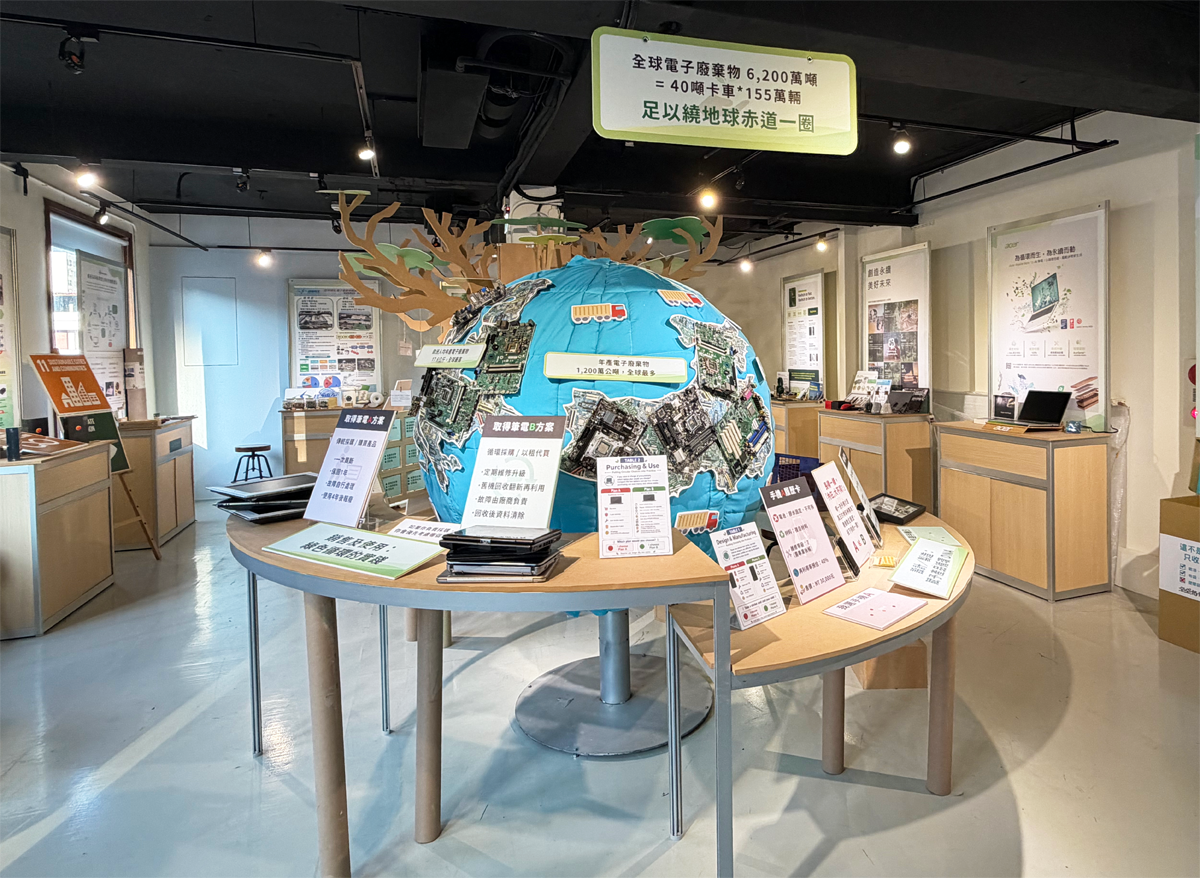
Driving toward "2050 Net-Zero Emissions," the Ministry of Environment co-launched the "Circular IT Journey" exhibition with industry and academic partners at C-LAB.
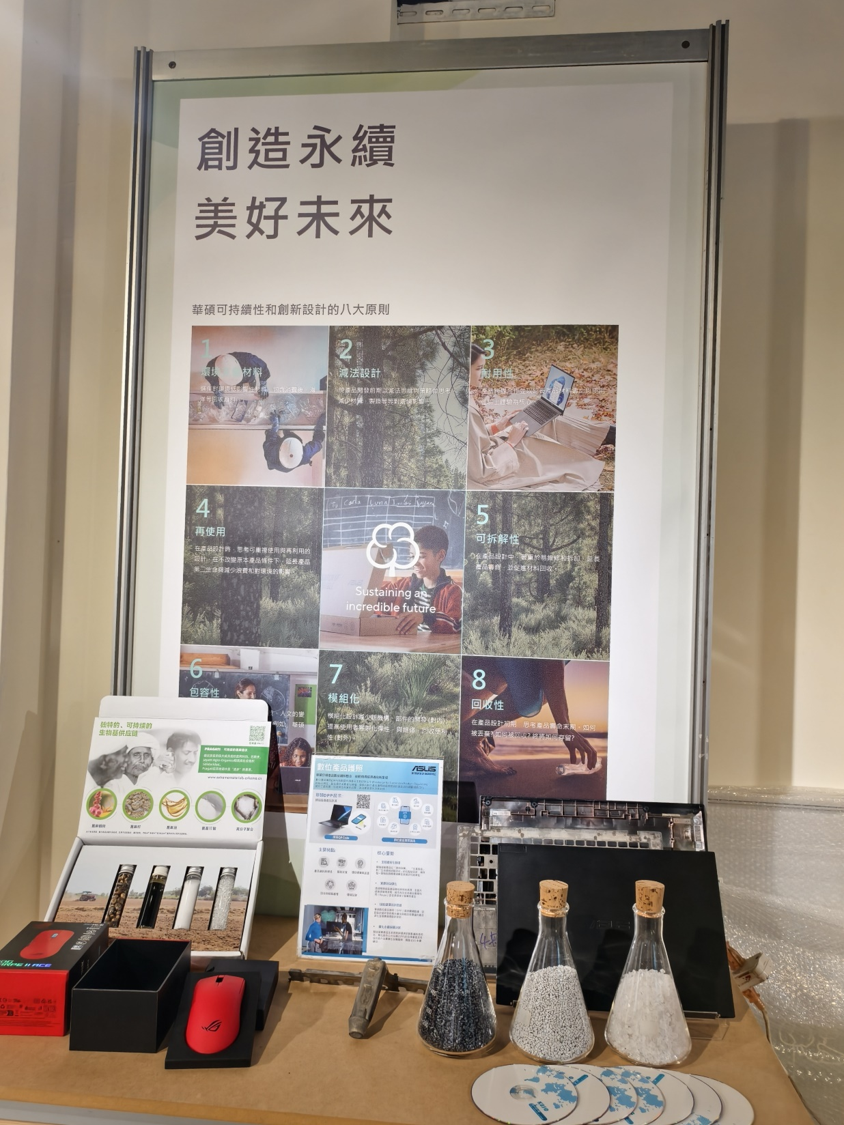
Through thematic experience zones, the exhibition presents the six critical life-cycle stages of IT products: Design & Manufacturing, Sales & Use, Recycling, Repair & Refurbishment, Resource Recovery, and Material Circulation. Within this framework, ASUS demonstrated its "8 Principles of Product Sustainability and Innovative Design," detailing its approach to balancing commercial viability, user experience, and environmental friendliness:
Scaling Eco-Friendly Materials for Low-Carbon Design
ASUS actively adopts diverse sustainable inputs, utilizing over 15 tons of pre-consumer recycled metals and rare earth metals in 2025. In terms of closed-loop material applications, ASUS has partnered closely with suppliers to recover cobalt-a critical raw material in laptop batteries—and re-integrate it into new product batteries.
Advancing Plastic-Free Packaging Milestones
In alignment with the UN's Global Plastic Treaty to end plastic pollution, sustainable packaging has become a cornerstone of our green products. In 2025, ASUS achieved a 92% ratio of recyclable packaging. Eco-friendly paper packaging for major products reached approximately 32,200 tons (including over 9,100 tons of FSCTM certified paper), representing an 87% growth in sustainable paper utilization compared to the 2020 baseline.
Innovative Bio-based Materials: Balancing Sustainability and Consumer Experience
Beyond recycled inputs, ASUS actively pursues natural material alternatives. The ROG Harpe II Ace Mouse, winner of the 2025 COMPUTEX Sustainable Tech Special Award and Best Choice Award, features an outer shell crafted from bio-based castor oil nylon. This material offers "low density and high strength," reducing the mouse's total weight to a mere 46g (nearly half the weight of conventional mice). This brilliantly demonstrates how sustainability parameters can be seamlessly woven into product architecture without compromising user experience.
Implementing Digital Product Passports (DPP)- Empowering Consumers through Information Transparency
To align with international ESPR sustainability standards, ASUS actively promotes information transparency. Through the implementation of Digital Product Passports (DPP), consumers can easily scan to gain complete visibility into essential details such as production, warranty, repairability, and sustainability metrics—leveraging digital technology to foster consumer trust in green products.
Exhibition information:
- Date: From now until the end of July
- Venue: Circular Redesign Center in Taiwan Contemporary Culture Lab (C-LAB)
Related Article